
"Santa Marta de Portuzelo" - Portugal

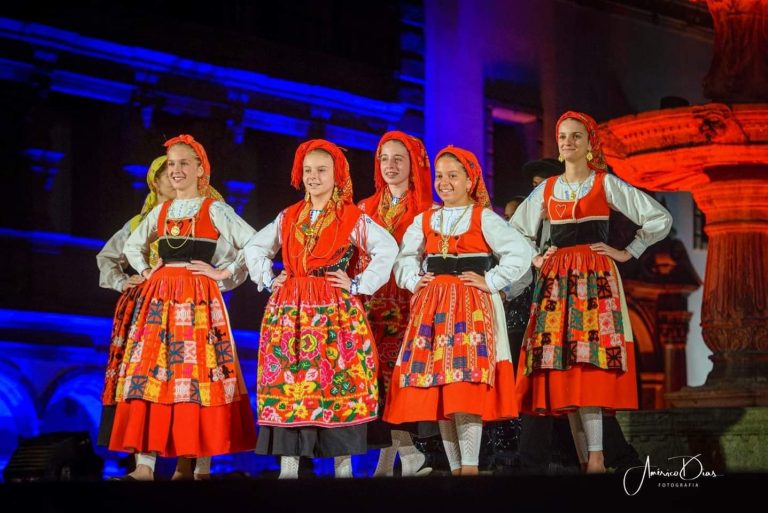
Santa Marta de Portuzelo, located in northern Portugal, is widely recognized both nationally and internationally for the richness of its ethnographic heritage. Renowned for its colourful traditional costumes, folk songs, lively dances, and well-preserved customs, the village has earned the prestigious title of the “Capital of Portuguese Folklore.”

Founded on 20 May 2001, the Santa Marta de Portuzelo Folklore School is dedicated to preserving, promoting, and passing on the traditional culture of the region to younger generations while sharing it with audiences in Portugal and around the world.

Since its establishment, the group has performed throughout Portugal and has proudly represented its region at numerous international festivals and cultural events in countries including France, Germany, Taiwan, Belgium, Poland, Malaysia, Switzerland, Spain, Andorra, and the Autonomous Region of Madeira.

The Folklore School provides children and young people with the opportunity to learn the traditional songs, dances, and music of their homeland, while also teaching them to play the traditional instruments that form an important part of the region’s cultural heritage. Through these activities, the group promotes cultural exchange, strengthens friendships between peoples, and contributes to the preservation of Portugal’s rich folkloric traditions.

The traditional costumes of Santa Marta de Portuzelo are distinguished by their vibrant colours and exceptional craftsmanship, while the dances are known for their energy, elegance, and technical demands. Among the region’s most emblematic dances are the Vira, celebrated for its lively rhythm and dynamic movements, and the Chula, admired for its graceful yet expressive character.

Today, the Santa Marta de Portuzelo Folklore School is composed mainly of children and young performers who proudly carry forward the traditions of their community, ensuring that this unique cultural heritage continues to thrive for future generations.

"Arbana" - Albania

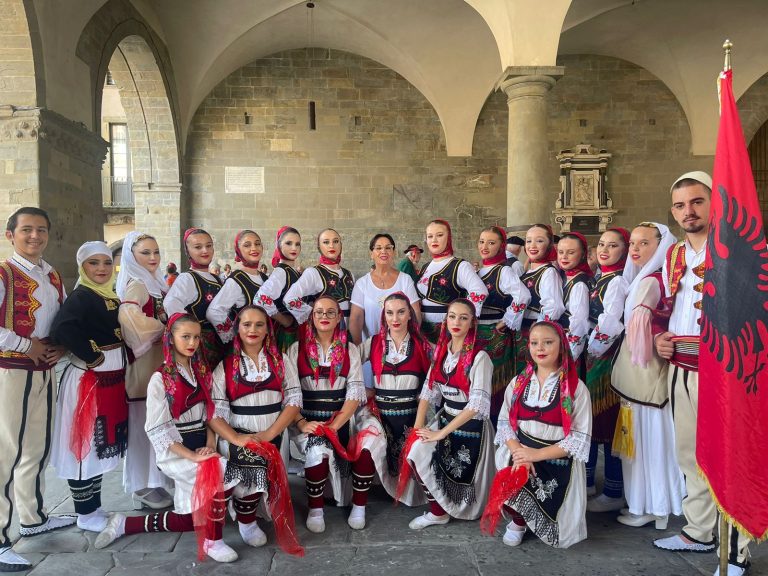
The Folklore Ensemble “Arbana” was created in 1978 in Tirana City initially as an amateur group composed of members of different ages who were joined together by the love for the folklore and traditions of Tirana area. They became well known all over the country within a short period of time due to their passion and high artistic level participating in  most of the national and area activities. The Ensemble has been always honored with prizes and honor diplomas as it was the case of the last edition of National Folk Festival of Gjirokastra in Albania where they were awarded the first prize.


The Folklore Ensemble “Arbana” have successfully represented Albania in many important international activities both in International Folk Festivals and concerts tours in several countries like Greece, France, Germany, Czech Republic, Slovakia, Egypt, Macedonia, Netherlands, Croatia, Turkey, Poland, Bulgaria, Hungary, Spain, Belgium, Italy, Romania etc. where they have been received very well by the audience and have been able to communicate warmly with it.


Our Ensemble performs dances, songs and melodies with folk musical instruments not only from ethnographic region of Tirana but from other regions of Albania as well. Dances are mainly authentic, but our Ensemble performs even elaborated ones maintaining the most of authentic elements accompanied always live by the orchestra. The elaboration of the folk dances is done by the most well known masters of Albanian ethno-choreography who have collaborated with the ensemble and have often directed it. An important value of the Ensemble is the great number of folk costumes from several areas of the country under its possession thus making it possible their change within a show in a way that every dance to be performed with the costume of the area it comes from.


The “Arbana” Folk Ensemble is composed of the folk dance group of 15-25 dancers, the orchestra made up of 5-8 musicians and the group of singers (dependent from the requirements of the festivals). The group is able to perform shows varying from 10 to 90 minutes and the number of participants in the group can be from 25 to 40 persons being always dependent from the requirements of the artistic activities.

"Rang" Folklore Foundation - India

The Rang Folklore Foundation – A School of Performing Arts for Global Exchange and Gujarat Art Platform is a cultural organisation with a proud history of more than four decades. Over the years, the foundation has made a significant contribution to the promotion and preservation of regional cultural heritage.

In recent years, with the remarkable growth of media and entertainment, the scope of cultural expression has expanded greatly, while the demand for authentic cultural experiences has also increased. Within this evolving landscape, the foundation continues to play an active role in presenting and preserving traditional Indian performing arts.

India’s 5,000-year cultural heritage is passed down through generations, reflected in its vibrant folk dances and folklore traditions. These art forms express the richness of human imagination and emotional expression, often inspired by nature, traditional occupations, and devotion to deities. Indian folk arts are generally spontaneous in nature, evolving organically without rigid structures, and are deeply connected to the communities that create them.

The Rang Folklore Foundation represents a commitment to building a strong cultural network and providing a platform for artistic exchange. The founders have dedicated over five decades to the preservation and promotion of this heritage, with the aim of guiding younger generations towards the global stage through the richness of traditional performing arts.

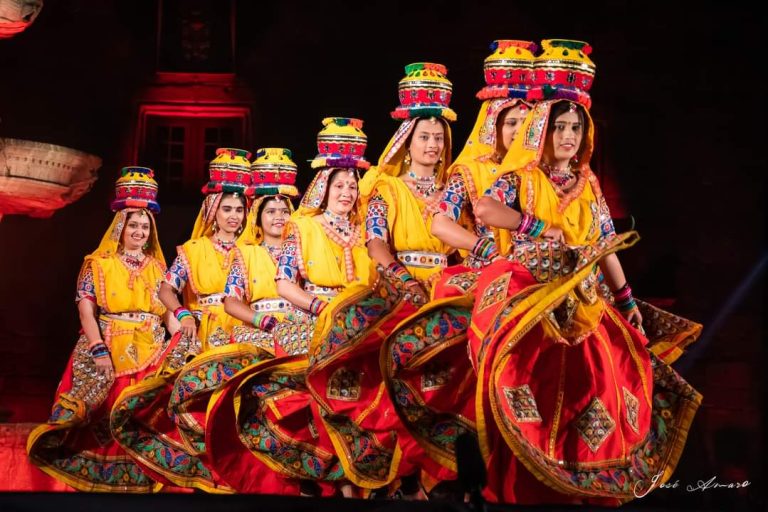
The foundation focuses particularly on Gujarati folk theatre (Bhavai) and folk dances such as Raas and Garba, art forms for which Gujarat has been known across India for centuries. These traditions continue to gain recognition internationally and are being shared with global audiences.

Beyond basic training, the foundation’s goal is to ensure that participants not only learn these art forms but also master them with authenticity, skill, and respect for their cultural essence. Through this approach, the Rang Folklore Foundation strives to keep traditional performing arts alive, relevant, and deeply expressive for future generations.
"Everest" Cultural Group - Nepal

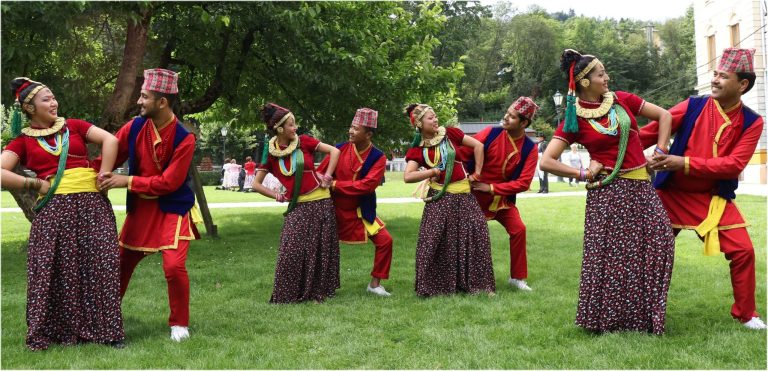
The Everest Nepal Cultural Group (ENCG) is a government-registered cultural organization founded in 1998 with the mission of preserving, promoting, and sharing the rich folk traditions, culture, and heritage of Nepal. Through its activities, ENCG aims to strengthen cultural exchange and foster mutual understanding among people from different countries and backgrounds.

Since its establishment, the organization has played an active role in promoting Nepalese culture both nationally and internationally. ENCG has successfully organized 13 editions of the International Folk Festival in various cities across Nepal, welcoming more than 9,500 artists from around the world and establishing the event as one of the country’s most important cultural gatherings.

With participation in over 500 international folk festivals worldwide, ENCG has gained extensive experience in cultural exchange and international cooperation. Through these activities, the group has built strong relationships with cultural organizations across the globe while showcasing the diversity and beauty of Nepal’s cultural heritage.

ENCG firmly believes that culture is a powerful force that promotes friendship, peace, harmony, and cooperation among people. Guided by these values, the organization continues to serve as a bridge between nations, connecting traditions and communities through the universal language of folk art and culture.
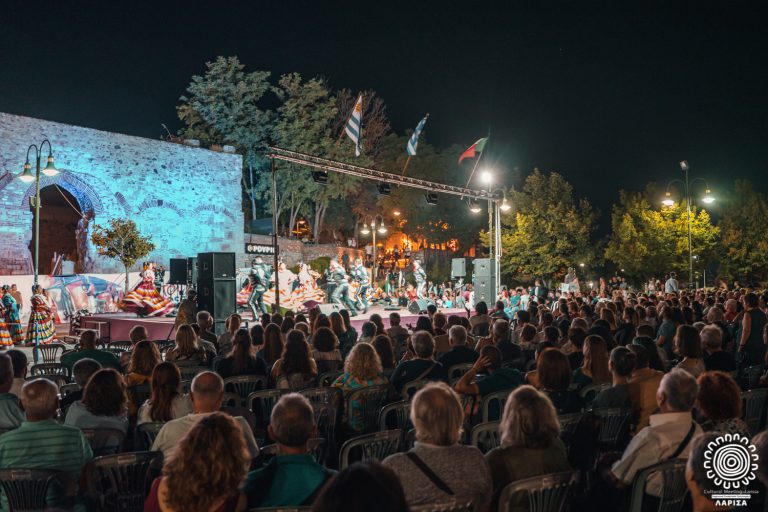
 

4 Cultural Associations from Greece

Chalki, Pirgetos, Sikoyrio and Tirnavos